
Complex Commercial Litigation

Complex Commercial Litigation

With one of the largest litigation practices of any firm in central Ohio, our carefully crafted litigation teams efficiently accomplish the broad array of tasks involved in preparing and presenting these complex lawsuits while never losing sight of the fact that litigation costs should always be controlled.

We represent both plaintiffs and defendants in the type of high-stakes litigation that requires complex, team-based, organizational communication and trial presentation skills. Our firm's history is highlighted by successful representation of business clients in litigating disputes that involve multiple parties, large witness counts, large volumes of documents, complex electronic information and e-discovery, lengthy trials, complicated factual issues, and in those suits in which the most sensitive critical principles must be sustained. When significant amounts of money, and often the company itself, are at stake, our clients look to our acclaimed team for effective representation.

Our Services

We have experience representing clients in every area of complex litigation, often involving anti-competitive conduct; breaches of agreements, company policies or practices relating to customers, employees or suppliers; CERCLA environmental claims; large construction disputes; and class action litigation of all types.

  • “Bet-the-company” lawsuits: high-stakes lawsuits in which the outcome will likely determine a company's future
  • Multi-party construction disputes
  • Class and collective actions: focused initially upon defeating class or collective action certification, and thereafter presenting a vigorous defense to the substantive claims
  • Civil litigation: representing individuals and companies in contract and business litigation involving top corporate management and fundamental aspects of the company’s business
  • Intellectual property litigation: protecting companies’ most valuable brand assets (e.g., trademarks, trade names, patents)
  • Environmental litigation: representing business and property owners in cases in which clean-up costs are significant enough to impact business finances

Our Clients

Examples of our representation of clients in notable complex litigation cases include:

  • Successful representation of a national defined-benefit pension plan in the trial defense of class action claims pertaining to employers’ pension plan withdrawal liability
  • Successful resolution of class action claims brought by employees against a regional fitness facility operator
  • Successfully defeating class certification in various class actions brought on behalf of employees, customers and franchisees of an international retail store operator and franchisor
  • Instituting litigation to secure retransmission consent rights for network affiliate programming for a leading cable television media company
  • Obtaining a $25 million settlement of breach of fiduciary duty claims on behalf of an international manufacturing corporation that was the target of a corporate takeover
  • Obtaining an $18 million judgment in a lawsuit arising out of a corporate merger
  • Successful trial defense of an international food and dairy products company alleged to have engaged in bid-rigging, price-fixing and territorial allegation in connection with government contracts
  • Obtaining injunctive relief protecting critical intellectual property and a multi-million-dollar settlement on behalf of a regional pizza store operator and franchisor in litigation against one of the nation’s largest pizza store chains


People

Robert Cohen

Director + Co-Chair, Litigation Practice

614-462-5492Email
Chris Weber

Director + Chair, Professional Responsibility Practice

614-462-5415Email
Nicholas S. Bobb

Director + Co-Chair, Litigation Practice

614-462-5414Email

Experience

Collateral Recovery + Bankruptcy Plan Challenge for Lender

Real Property Recovery + Contract Litigation for Public Institution

Lease Dispute with Prominent Central Ohio Restaurant

Lease Dispute with Prominent Central Ohio Restaurant

Six-Figure Liquidation of Regional HVAC Business

HVAC machinery

Kegler Brown Attorneys Achieve Key Legal Victory in Jones v. Producers Service Corporation

A judge's gavel on a desk with judicial logos overtop

Litigation Defense of a Local Automotive Dealership

Overhead view of a crowded auto dealership parking lot full of vehicles

Successful Representation in CERCLA Litigation

Successful Representation of Workers Permanently Injured by Propane Gas Explosion

A judges gavel

Chapter 11 Bankruptcy Representation of an Internationally Acclaimed Brewery

Brewery machinery

Publications + Presentations

publication

5 Recommendations for Universities Facing Tuition Refund Class Action Suits

Smart Summary If your college or university sees a class action suit as a result of COVID-19, contract terms, including language of any force majeure clauses, will be critical.In addition to contract-based defenses, colleges + universities may look to procedural defenses and common law defenses like “impossibility” and “frustration of purpose.”Universities will want to think through their refund and future service credit offerings to try to minimize claims and any potential damages. In the wake of colleges and universities across the country turning to distance learning to minimize the spread of COVID-19, it is no surprise that putative class action complaints are now being filed seeking refunds and discounts on tuition and other fees paid by students. By now, you likely already know that cases have been filed against Purdue University, the University of Miami, Drexel University, and the Boards of Regents of both the University of Colorado and the University of Arizona. A number of these suits have been brought by the same law firm, which is attempting to attract new cases through its website “CollegeRefund2020.com.”Some of the suits seek reimbursement of a portion of paid tuition, based on the theory that the students contracted for an on-campus educational experience, which has not been provided. Other suits seek reimbursement of a portion of paid housing, meal plan expenses, and/or other service fees relating to athletic facilities, medical services or other amenities.For in-house counsel at universities across the country who are pondering whether their institution will be the next target of these lawsuits, we’ve outlined five key questions you should be considering if (and even before) your institution is sued.What are the contract terms? The claims being filed are predominantly contract claims, so the specific language of your institution’s contractual relationships with its students will be important. The applicable terms may specifically address refunds, school closures, and emergency circumstances. Is “force majeure” a defense? You and your outside counsel should consider whether there are any contractual force majeure provisions that may relieve performance in the event of some unforeseeable circumstance like a nationwide pandemic. Again, the specific language of your force majeure provision is important.Are there common law defenses? Even if the contractual language at issue does not contain a force majeure provision, certain common law defenses may be available, depending upon the jurisdiction in which any suit is brought and the applicable law. Common law principles of “impossibility” and “frustration of purpose” can, under some circumstances, provide a defense.Are there procedural defenses? In addition to contract-based defenses, procedural defenses may also be available to you. An institution that has been sued will want to consider: whether personal jurisdiction exists in the jurisdiction in which the suit has been brought; whether the named plaintiff is an appropriate representative of the putative class; how the class or classes have been defined; and whether the traditional legal requirements for each claim have been met. Unjust enrichment claims are included in several of the early cases. The law of most states holds that claims for breach of contract and unjust enrichment are mutually exclusive, although many states allow plaintiffs to plead both, subject to later proof and/or choice of remedy.What can be done to minimize claims and potential damages? The relevant facts vary from university to university. Some universities have allowed students to remain in student housing and to continue to receive meals pursuant to their meal plan, while other universities have ceased housing and cafeteria operations entirely. Some universities have offered refunds or partial refunds, while others have not. Ensuring students stay on track to receive course credits toward graduation during periods of necessary distance learning will help to mitigate potential damages. Institutions that think creatively and take steps to introduce new ways of fostering community engagement and mentorship that would otherwise take place in residence halls will also be in a better position to defend tuition claims. For example, if a student took History 101 during the mandated period of distance learning, allowing him or her the option to re-take the class in-person once school resumes may be a productive way to mitigate potential damages. Similar options may exist for meal, athletic and health services. However, similar options may not exist with respect to housing availability. While closure decisions may already have been made, universities will want to think through their refund and future service credit offerings to try to minimize claims and any potential damages.No matter the course of action you choose, college and university counsel should be in close communication with their outside counsel partners, in particular those with substantial class action experience. Discussing these and other potential defense strategies can give your institution a head start on any litigation that may be headed your way.Vinita Mehra is a director and chair of Kegler Brown’s Global Education practice group, and works with college and university clients across the country on their operational and strategic planning issues. She can be reached directly at vmehra@keglerbrown.com or (614) 255-5518.Lori Fuhrer and Robert Cohen are directors and experienced trial lawyers in Kegler Brown’s Class + Collective Action practice, where they defend clients in contract and class action litigation of all kinds.Fuhrer can be reached directly at lfuhrer@keglerbrown.com or (614) 462-5474.Cohen can be reached directly at rcohen@keglerbrown.com or (614) 462-5492. 

publication

Insurance Coverage Claims in the Age of COVID-19: Don’t Wait

Turning and turning in the widening gyre The falcon cannot hear the falconer; Things fall apart; the centre cannot hold; Mere anarchy is loosed upon the world We are in the middle of something that, for a lot of businesses, seems like Yeats’ “The Second Coming.” We have remote work orders, full closings of certain kinds of businesses, supply chain disruptions, vanishing customers. At worst, these are existential threats, and at best, pretty painful. In the middle of the necessary and almost hourly triage that in 14 days has started to feel normal, it can be hard to think of longer-term strategies, but here’s an important one: insurance. Your insurance policies may not produce immediate cash, but now is not the time to ignore them, either. We’re fielding questions on business insurance from our clients every day. Here’s what they’re asking. 1. What kind of insurance provisions might I have that can help? Your property and casualty insurance policies might have provisions and endorsements that can help to cover your business losses. For example, you might have coverage for “business interruptions” or for losses caused by “orders of civil authorities.” Some policies will even contain endorsements specifically related to “communicable diseases.” If you have losses caused by supply chain disruptions, or caused by the shutdown of a nearby property, you will want to see if your business has coverage for “contingent business interruption.” In addition, your directors and officers liability insurance policy can be evaluated for potential “crisis management” coverage. Your business also may have purchased “trade credit” insurance, which may cover losses when your customers fail to pay. The particular language of your company’s policy or policies is key. 2. Aren’t insurance companies just denying all the coverage anyway? Our expectation and experience to date is that many insurance companies are taking a conservative approach to coronavirus-related claims, and issuing a lot of denials. After all, this virus has huge business disruption potential, and the claim volume and impact could be enormous. Carriers are going to push back, and there will undoubtedly be some fundamental disagreements relating to these policies that will eventually need to be resolved by the courts. One significant disagreement will relate to whether “property damage” exists sufficient to trigger most business interruption coverage. Insurance policies are complex documents, and they contain many exclusions that must be evaluated. Policy language can vary significantly from one carrier to the next, and an experienced attorney can help you to understand whether your policy language supports a potential claim, and can help you to navigate whether and how to pursue a claim. 3. What types of losses might be covered? The types of losses potentially covered will depend on your insurance contract language. Some policies cover loss of “business income” that results from having your operations shut down or interrupted. Other potential covered losses might include expenses in remediating a communicable disease, expenses associated with canceled events, crisis management expenses, and losses caused by supplier disruption or the disruption of a nearby business. 4. Why do I need to care about this right now? Unfortunately, you can’t wait until the courts resolve all of this to take some action. Most policies have notice provisions, requiring insureds to provide prompt notice of potential claims. Failure to do so can impact coverage and recovery. Understanding your potential claims now can also put you in a better position to know what records to maintain, so that you are later able to support your claim with documentation. While every situation will be unique, we’re recommending three simple steps that businesses should be taking right now to help them identify, pursue and support potential claims:Identify. Get your policies reviewed by an attorney ASAP for analysis of potential claims. Your broker can be a first stop for information and you should rely on him or her to provide your full policies, with all endorsements. Then get independent legal advice on whether you have potential claims. Pursue. Work with your counsel to prepare proper notices of potential claims, in order to meet any contractual prompt-notice requirements. These will help you to be in a better position to pursue your claims later, if you choose to do so. Support. Once you understand your company’s coverage, put a system in place to document and keep good records of all losses, so your business is in the best position possible to support its claims. 

publication

Winning at Trial

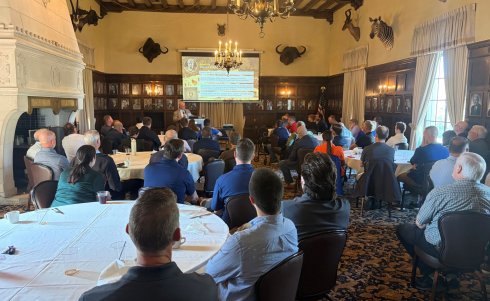
On November 20, Tom spoke during a one-day trial advocacy seminar featuring several of Ohio’s leading trial lawyers. Attendees were taken through the trial process, gaining insight on tactics and strategies leading up to and during trial. Topics discussed also included approaches to pre-trial discovery, preparing for trial, jury selection, opening statements, direct and cross examinations, and closing arguments. Tom spoke on cross examinations, giving step-by-step guidance on preparing questions and emphasizing the importance of organization. 

OSBA webinar cosponsored by the ACTL
publication

The Art of Witness Preparation

On August 9, 2019, Tom presented to the Legal Aid Society of Columbus on the oft-overlooked topic of teaching witnesses to be witnesses. While most educational programming for lawyers focuses on what they must do in a courtroom, little guidance is provided for preparing witnesses, who are speaking in an alien environment and are often frightened and uncertain. Focusing on a witness’s role in persuading a jury, Tom described to attendees how to work with a witness to tell a story using organized, open-ended questions that allow the witness to comfortably tell their portion of the truth. He discussed preparing for direct and cross-examination, as well as the importance of not over-preparing. 

Legal Aid Society of Columbus
publication

Administrative Procedures Act and the Ohio Medical Marijuana Program

The Department of Commerce and Board of Pharmacy are well underway to standing up Ohio’s Medical Marijuana Control Program, with the cultivator applications now submitted for the initial 24 licenses. Under the MMCP rules, the Department of Commerce, with the help of hired consultants, will determine which applicants will get one of the twelve small or twelve large cultivator licenses. A similar, competitive process will occur for the limited number of processor and dispensary licenses that will be issued by the Department of Commerce and Board of Pharmacy.Under H.B. 523 (131st General Assembly), the Ohio Medical Marijuana Act (MMA), the rules governing each type of license are subject to Chapter 119 of the Ohio Revised Code, the Administrative Procedures Act (APA). In fact, state licensure and due process surrounding licensure is generally governed by the APA. While there are exceptions when a statute so specifies, no such exception appears in the MMA. In fact, several existing rules and soon-to-be-rules reference rights to prior notice, an opportunity for a hearing and other rights in relation to licensure, fines, suspensions, employee matters and rule violations.The traditional state agency action against a licensed entity or individual has the hallmarks of due process – including notice that the state is going to take an action (e.g., deny or revoke a license, issue a fine or suspension against a licensee), and coupling it with the right to be heard (i.e., an opportunity for the target of the action to request a hearing within a specified timeframe to challenge the contemplated action).Generally, the target of the action cannot go to court to collaterally challenge a state licensing agency’s decision. The proper forum is an appeal to the same department that took the action in the first instance. In the event the license applicant’s appeal is unsuccessful, that applicant may then appeal to a court of common pleas. The appeal can eventually get to the Ohio Supreme Court. There are, no doubt, creative theories that lawyers have attempted to use through extraordinary remedies to side-step the APA, but courts are not creatures of innovative legal theories when long-standing statutes can provide an adequate legal remedy.The Administrative Procedures Act can be procedurally and substantively tricky for a non-lawyer, or even a lawyer unfamiliar with securing a hearing, discovery, standards, preserving a record or filing an appeal. And yes, a denied license applicant or eventual licensee subject to a disciplinary action is essentially appealing to the same department that initiated or has taken the action being challenged. To those considering any Federal court challenge, think long and carefully about options and a likely federal court interpretation of your requested remedy (i.e., medical marijuana is not legal), notwithstanding Ohio considering marijuana a Schedule II controlled substance under Chapter 3796.01 of the Revised Code. The APA may be the only viable option.For any questions regarding the Ohio Medical Marijuana Control Program, contact members of the Kegler Brown team of lawyers at (614) 462-5477 or email lpierre-louis@keglerbrown.com.

publication

E-Discovery Update: More from Judge Peck on Predictive Coding

This week brought another decision from United States Magistrate Judge Andrew J. Peck (S.D.N.Y.) on Predictive Coding or Technology Assisted Review (TAR). Judge Peck, well-known for his judicial thought leadership on this topic, authored the now famous, pro-TAR Da Silva Moore Decision in February of 2012. Da Silva Moore v. Publicis Group & MSL Grp., 287 F.R.D. 182 (S.D.N.Y. 2012), aff'd, 2012 WL 1446534 (S.D.N.Y. Apr. 26, 2012). In that decision, Judge Peck stated, "What the Bar should take away from this Opinion is that computer-assisted review is an available tool and should be seriously considered for use in large-data-volume cases where it may save the producing party (or both parties) significant amounts of legal fees in document review."Now, three years later, Judge Peck is at it again in Rio Tinto PLC v. Vale S.A., Case No. 14 Civ. 3042 (Mar. 3, 2015 S.D.N.Y.). In Rio Tinto, Judge Peck reflects that, in the time since Da Silva Moore, it has become "black letter law" that courts will permit producing parties to use TAR for document review. His decision cites numerous decisions from courts around the country that have approved of the use of technologies like predictive coding to determine the relevant documents for production and thereby reduce the burdens of e-discovery.Judge Peck identifies, in Rio Tinto, that a key issue practitioners, parties and courts are still struggling with is "how transparent and cooperative the parties need to be with respect to the seed or training set(s)." For example, some courts have required the party that utilizes predictive coding to provide full access to the seed set's non-privileged documents, so the integrity of the training may be assessed. In Da Silva Moore, Judge Peck had encouraged the sharing of such information. However, as technologies advance to continuous active learning, the seed set plays a less significant role in the overall operation, and disclosure of the seed set may not provide meaningful information. As a result, the industry may need to consider other methods of verifying the integrity of the process where cooperation breaks down. However, Judge Peck stresses, "It is inappropriate to hold TAR to a higher standard than keywords or manual review."The TAR protocol at issue in Rio Tinto was agreed upon by the parties, and it is attached to the decision. The decision, along with its attached stipulation and order re: Use Of Predictive Coding In Discovery and a joint letter to the court by the parties further explaining the agreed-upon protocol, can be found here.