

Purchase + Sale Transactions

Purchase + Sale Transactions

Our firm’s real estate attorneys combine in-depth knowledge of local and regional markets with a broad understanding of the legal, regulatory, and economic issues affecting our clients. Our experience includes transactions throughout the country, as well as inbound international real estate dealings.

We advise buyers and sellers in the structuring, negotiation, and closing of real estate purchase and sale transactions. Our lawyers guide our clients through every aspect of the transaction, including the preparation of all required documents and the formation of ownership and acquisition entities (e.g. LLCs and joint ventures). We work with our clients through any issues that may arise, from resolving title defects to addressing environmental concerns to generating tax-free exchanges.

Our Services

  • Document preparation: preparation and negotiation of acquisition, disposition and financing documentation, including purchase and sale agreements reciprocal easement agreements, and joint ventures
  • Transaction due diligence: review of title insurance commitments, surveys, entitlement reports, land use approvals and environmental site assessments
  • Corporate M+A transactions: oversight of all real property aspects of any transaction
  • Foreign direct investment: offer counsel on global inbound commercial real estate investments in conjunction with our global business practice

Our Clients

Ranging from neighborhood shopping centers and restaurant groups to national developers and retailers, our clients include both public authorities and private sector developers. We represent public housing authorities, port authorities, transportation improvement districts (TIDs), and a variety of governmental bodies. Our lawyers represent buyers and sellers, offering comprehensive insight into the concerns of both sides. With this overarching experience, we can resolve any competing intentions to make sure that our client’s business objectives are met efficiently and cost-effectively.


Experience

Established Automotive Client Expands Portfolio with New Dealership Acquisitions

Overhead view of a crowded auto dealership parking lot full of vehicles

Exchange of Real Property Between U.S. Army and Private Industrial Park

Creation of Dual-Rail Industrial Park


Publications + Presentations

Article

FCC’s Rules: What MDU Owners Need to Know About Revenue Sharing Agreements, Marketing to Tenants, and Sale-and-Leaseback Arrangements

publication

Ohio’s Revised LLC Act - What You Need to Know

Article

Columbus City Council cracks down on short-term rentals

Michael Schottenstein writes in Columbus Business First about the City of Columbus’s new ordinance that was set in place to help alleviate problems with short-term rentals, including disruptive parties, overcrowding and illegal activities.

Columbus Business First
publication

Are Ohio’s Commercial Landlords and Lenders Now Required to Give a 90-day Reprieve?

Smart Summary Governor DeWine issued an executive order requesting landlords to suspend commercial rent payments for at least 90 days. The Order also urges lenders to offer a similar reprieve to their landlord borrowers. The Order is not legally binding, though more forceful language could potentially be forthcoming. Since the COVID-19 crisis began, we’ve been fielding calls and e-mails from clients on both sides of the commercial landlord-tenant relationship.  Tenants negatively affected by the crisis want some sort of relief from their landlords in terms of a rent abatement or forbearance, and landlords are receiving a crippling volume of these requests from their tenants. Typically, there is no legal ground to require a landlord to grant an abatement or deferral request, but from a practical standpoint, it still may make sense for them to work with commercial tenants if the alternative is for those tenants to permanently close their doors. At the same time, it’s also important to recognize that landlords may be caught between a rock and hard place. Most are still required to make mortgage payments and pay taxes, common area maintenance costs and other expenses, without receiving rent from their commercial tenants. Each side may also put the responsibility on the other to attempt to obtain relief from federal sources, including the SBA’s Economic Injury Disaster Loan program and the Paycheck Protection Program provision of the recently passed CARES Act. To date, however, there hasn’t been an across-the-board standard or a one-size-fits-all approach for negotiations between commercial landlords and tenants dealing with the effects of COVID-19.Governor DeWine Opines with an Executive Order In an attempt to provide some relief for both sides, Governor Mike DeWine issued Executive Order 2020-08D on April 1, urging Ohio landlords to suspend rent payments and evictions for at least 90 days for small-business tenants experiencing “financial hardship due to the COVID-19 pandemic.” Accordingly, to assist those landlords who would then be at risk of defaulting on their own mortgages, the Order also requests that lenders agree to a minimum 90-day forbearance and refrain from enforcing default penalties or initiating foreclosures during that period. The Order specifies, however, that the governor is not requesting a rent abatement under the leases, nor forgiveness of mortgage payments, just a delay in collections instead.Interpretation: Request or Requirement? While the language may not be entirely clear, our interpretation of this Order is that it is a request, not a requirement , and that landlords and lenders alike are not currently legally obligated to comply. However, we think it’s unlikely that a court in Ohio is going to take up a foreclosure action at this time. Given the rapidly evolving pace of change right now, it’s certainly possible for Governor DeWine to sign a more forceful Order before this situation is over. Regardless, this Order may provide a new baseline for negotiations between landlords and tenants as they navigate through the COVID-19 crisis. Michael Schottenstein is an associate attorney in Kegler Brown’s Real Estate + Finance practice. He represents both commercial landlords and tenants in the drafting and negotiation of leases, amendments and works with clients in the context of their more general business operations. Michael can be reached at mschottenstein@keglerbrown.com or (614) 462-5451.

publication

Effective Use of Ohio Transportation Improvement Districts (TIDs)

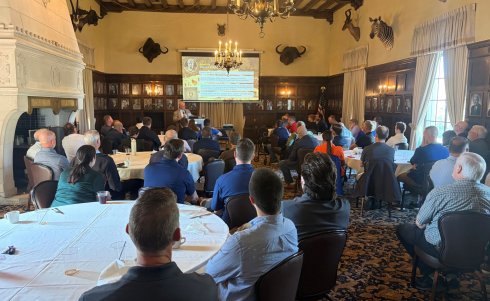
On October 11, 2017, Steve presented during the 2017 Ohio Transportation Engineering Conference as part of a series of presentations about local tools for financing transportation infrastructure. His focus was on effective uses of Ohio TIDs. Steve introduced the concept and capabilities of TIDs – how to create them and what they can do. He detailed multiple reasons why TIDs are more effective and cost-effective when compared to their alternatives and reviewed examples from TIDs throughout the state.

2017 Ohio Transportation Engineering Conference
Article

Real Estate Considerations in the Medical Marijuana Arena

When an entity or individual associated with medical marijuana is interested in purchasing or leasing real estate for their business, there are additional considerations that should be added to checklists and analyzed throughout the due diligence process in order to comply with the Ohio Medical Marijuana Control Program (“MMCP”) regulations.#1 Location Restrictions:Although the processing/testing/dispensing rules are not yet final, they are leaning to be in line with the cultivation license rules. ORC 3796.30 prohibits any medical marijuana cultivator, processor, or retail dispensary from being located within 500 ft. of the boundaries of any parcel of real estate located near a school, church, public library, public playground or public park. This does not mean 500 ft. from door to door, but parcel boundary to parcel boundary. Dispensary rules will likely include an additional limitation prohibiting dispensaries from being located within 500 ft. of a community addiction services provider.#2 Zoning Considerations:House Bill 523 authorizes the legislative authority of a municipal locality or township board to adopt their own regulations to prohibit or limit the number of medical marijuana facilities within their locality. Often times, a locality will limit cultivators and processors, but not dispensaries, or some other combination of the three. It is critical to check the local zoning rules of a proposed medical marijuana facility because the MMCP will require every applicant to provide evidence of compliance with all local ordinances, rules or regulations adopted by its locality.#3 Evidence of Compliance:If the processing and dispensing applications follow the cultivation license application, it is likely that the MMCP will require (or at least encourage) applicants to get a notarized signature from an individual representing the proposed facility’s locality. This is intended to show that the applicant is in compliance with the local zoning regulations, but can be tricky in localities that have been silent on the matter or are not yet prepared to authorize such a statement.#4 Leases & Unclosed Purchases:The owner of the real estate will likely need to sign off that there are no use restrictions on the property, or any lease restrictions in a leasehold, that would otherwise prevent the applicant from complying with MMCP regulations. If the applicant does not own the property, the applicant will most likely need to get their landlord and/or the owner of the property to sign and notarize a form in the application affirming that no such restrictions exist. This can be tricky when the owner/landlord is an unrelated third party and is unclear on their position or intentions for the property in relation to the medical marijuana industry. Strategy and open communication should be utilized to avoid a situation where the deal is being held up due to a lack of signature.The next few months will see many more questions and answers as Ohio rolls out final rules for medical marijuana processors and dispensaries. If you have questions concerning the Ohio Medical Marijuana Control Program, its regulations or application process, contact me at rgold@keglerbrown.com.