
International Franchising

International Franchising

In combination with our Global Business practice area, our Franchise + Distribution team regularly works with franchised businesses looking to expand into international markets, as well as clients looking to expand into the United States from other countries or into other cross-border markets.

We put a special emphasis on global intellectual property protection and cross-border contract drafting, negotiation, and enforcement, in order to keep our clients’ interests as secure as possible during the significant move to operating internationally. Our experience with franchising and global business gives us unique insight into the specific needs of international franchising, such as navigating local laws and regulations for each franchise location and brand protection.

Along with the services that local or domestic franchises normally require, such as real estate services, compliance and registration, and even outside general counsel services, we frequently assist clients with needs unique to international operations, such as global employment relations, tax planning, and cross-border disputes. We also provide guidance on contractual, customs, and international trade issues connected to dealers, supply chains, and distribution.

Our Clients

Our most successful international franchise clients have developed business models that have seen success in replication. When the scope of such clients’ intended growth begins to reach toward international expansion, they benefit from our experience with every aspect of the franchising process in a variety of industries, including food service, education, retail, healthcare, hospitality, and professional services sectors.



People

Vinita Mehra

Director + Leader, Global Business Practice

614-255-5508Email
Kacie N. Davis

Director + Chair, Business Transactions + Franchising

614-462-5402Email
Jeff Nein

Director + Chair, Intellectual Property Practice

614-462-5418Email

Publications + Presentations

Presentation

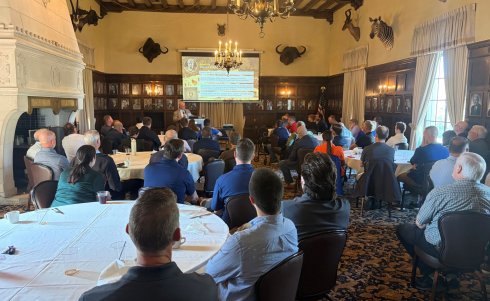
Legal Insights for Navigating Franchise Sales + Global Franchising Key Trends

OBBA November Global M&A Luncheon
Article

Executive Order Pausing the Foreign Corrupt Practices Act (FCPA): Key Issues

Article

Complying with Recent OFAC Sanctions Imposed Against Russia + Belarus

publication

Ohio’s Revised LLC Act - What You Need to Know

Video Clip

Indo-US Economic Partnership: Prospects & Challenges in the Approaching Decade

Vinita was invited to speak as a guest of the Indo-American Chamber of Commerce as part of the IACC’s 16th Indo-US Economic Summit in September 2020. The event focused on the business opportunities and trends between the US and India and Vinita, who presented as part of a panel, addressed the effects of the COVID-19 pandemic on trade relations and the rising political and economic tension between the two countries. 

Indo-American Chamber of Commerce 16th Indo-US Economic Summit
publication

Seminar on Trade Finance: Understanding & Addressing the Gaps in International Trade

On September 4, Vinita joined the CII Western Region webinar, under the aegis of the Sub-Committee on International Trade and Investment, that focused on understanding and addressing the gaps in international trade. Along with Vinita, the featured panelists were Ms. Harsha Bangari, the Deputy Managing Director of EXIM Bank and Mr. Sethuraman Sathappan, Chief Operating Officer of India, Emirates NBD.

Confederation of Indian Industry (CII) Live Webinar
Article

Why Franchise Businesses Should Be Re-Evaluating Their “No-Poach” Provisions

publication

Key Legal + Business Issues - Navigating Complexities in Doing Business in the U.S

On Friday, May 1, Vinita Mehra and Cody Myers presented at Indo-American Chamber of Commerce’s Key Legal + Business Issues: Navigating Complexities in Doing Business in the U.S. webinar. The webinar covered a variety of topics including: drivers + trends of Indian outbound investments to the U.S., EDO incentive programming, negotiating contracts, protecting intellectual property, and impact of COVID-19 on Indo-U.S. businesses.Webinar SpeakersDr. Lalit Bhasin, President, IACC, NICMr. Raman Roy, Chairman and Managing Director, QuatrroMs. Aileen Nandi, Minister Counselor for Commercial Affairs, U.S. EmbassyMs. Vinita Mehra, Director + Leader, Global Business Practice, Kegler Brown Hill + RitterMr. Cody Myers, Associate, Kegler Brown Hill + RitterYou can listen to the webinar recording here. <link recording>You can view the presentation here. <link slideshare> On Friday, May 1, Vinita Mehra presented at Indo-American Chamber of Commerce’s Key Legal + Business Issues: Navigating Complexities in Doing Business in the U.S. webinar. The webinar covered a variety of topics including: drivers + trends of Indian outbound investments to the U.S., EDO incentive programming, negotiating contracts, protecting intellectual property, and impact of COVID-19 on Indo-U.S. businesses.Webinar Speakers Dr. Lalit Bhasin, President, IACC, NIC Mr. Raman Roy, Chairman and Managing Director, Quatrro Ms. Aileen Nandi, Minister Counselor for Commercial Affairs, U.S. Embassy Ms. Vinita Mehra, Director + Leader, Global Business Practice, Kegler Brown Hill + Ritter Mr. Cody Myers, Associate, Kegler Brown Hill + RitterKegler Brown · Key Legal + Business Issues - Navigating Complexities in Doing Business in the U.S

publication

PPP + EIDL Eligibility for Foreign-Owned U.S. Businesses

Smart Summary U.S. companies with foreign ownership may be eligible for both the PPP and EIDL government loan programs, depending on corporate structuring.EIDL eligibility counts employees of all affiliated companies, whether U.S. or non-U.S., toward the general 500 cap.The PPP is more lenient, and counts employees of all affiliated companies toward the 500 general cap ONLY IF they have a principal place of residence in the U.S. In light of the new loan programs from the Small Business Administration (“SBA”), small businesses all over the United States have acted quickly to apply for and obtain the newly available funds. Both the Paycheck Protection Program (“PPP”) and the Economic Injury Disaster Loans (“EIDLs”) provide a small business owner with operating capital necessary to implement a holistic cash access strategy in order to survive – and possibly thrive – during this “Great Pause.” A savvy business owner can combine both the PPP and EIDLs to have many operating expenses entirely covered while weathering the storm of U.S. government-imposed lockdowns. This is very clear for companies based in the U.S., but what about U.S.-based businesses with foreign parent companies? Can they take advantage of the PPP and EIDL? The answer is: maybe.A U.S.-based company owned by a foreign company may be eligible for both the PPP and an EIDL. In most of these cases, the answer will depend on two things: 1) number of employees, and 2) the organizational structure of the conglomerate. Number of Employees Under EIDLs + the PPPAlthough there are several eligibility requirements, an applicant business is generally eligible for a loan under either program if it has fewer than 500 employees. If a business has more employees, it may still be eligible if the size is considered “small” based on industry standards, as determined by the SBA. Under both programs, employees of affiliates are attributable to an applicant. However, to make matters more confusing, the number of employees attributable to an applicant are calculated differently under each program.Number of Employees under an EIDL – Foreign Affiliate Employees CountA U.S. company owned by a foreign company has at least one affiliate (its parent company and possibly other companies also owned by the parent company). For purposes of an EIDL, all employees of affiliates are counted against an applicant, regardless of the employee’s principal place of residence. If a company is found to be an affiliate of an applicant, then all employees of the affiliate, both U.S. and non-U.S., are counted against the applicant.Number of Employees under the PPP – Foreign Affiliate Employees Might Not CountUnlike the EIDL program, the PPP makes an important distinction with respect to employees of affiliates. Based on guidance issued by the SBA, only employees of affiliates having a principal place of residence in the United States count against an applicant for purposes of determining eligibility under the PPP. Therefore, even if a U.S. company with a foreign parent company and foreign affiliates would be well over the 500 threshold for purposes of an EIDL, it may be eligible for a PPP if, between the applicant and its affiliates, there are not greater than 500 employees having a principal place of residence in the United States.Affiliation- Why Your Company Structure MattersThe structure of an applicant’s parent company will determine how many affiliates are attributable to an applicant. A comprehensive analysis of the SBA’s affiliation rules is necessary to conclusively determine whether entities are affiliates. But generally speaking, entities are affiliates if one controls the other or a third party has the power to control both. Control is determined by analyzing the governing documents of the entities. Notably, control may be found even if there is simply an ability to block action by the entity, or “negative control.” Examples + Related EligibilityAs we mentioned above, the structure of the conglomerate matters for determining eligibility under the PPP and an EIDL. Here are examples some examples.Company A – Eligible for PPP and EIDLResult: Company 1 is eligible under the PPP and for an EIDL. Explanation: Parent, Company X, and Company Y would be considered affiliates. Because Parent has the ability to control Company A (via its 100% ownership), Parent is an affiliate of Company A. Further, because Parent has the power to control Company A, Company X, and Company Y, they would also be considered affiliates. Therefore, for purposes of Company A’s eligibility under an EIDL, the total number of employees attributable to it would be 400. Company A is also eligible under the PPP because only 100 of the total employees have a principal place of residence in the U.S.Company B – Eligible for PPP, but not EIDL Result: Company B is eligible under the PPP, but not for an EIDL. Explanation: Parent, Company X, and Company Y would be considered affiliates. Because Parent has the ability to control Company B (via its 100% ownership), Parent is an affiliate of Company B. Further, because Parent has the power to control Company B, Company X, and Company Y, they would also be considered affiliates. Therefore, for purposes of Company B’s eligibility under an EIDL, the total number of employees attributable to it would be 3,100. However, Company B is eligible under the PPP because only 100 of the total employees have a principal place of residence in the U.S.Company C – Not Eligible for the PPP or EIDLResult: Company C is not eligible under the PPP or for an EIDL. Explanation: Parent, Company X, and Company Y would be considered affiliates. Because Parent has the ability to control Company C (via its 100% ownership), Parent is an affiliate of Company C. Further, because Parent has the power to control Company C, Company X, and Company Y, they would be considered affiliates. Therefore, for purposes of Company C’s eligibility under an EIDL, the total number of employees attributable to it would be 3,100. Company C is also not eligible under the PPP because 600 of the total employees (Company C’s and Company X’s) have a principal place of residence in the U.S. What You Should DoIf you are a U.S.-based company owned by a foreign company, you may be eligible under these loan programs. The answer lies in the total number of employees under your parent company’s corporate umbrella, how many of them would be attributable to you under the affiliation rules, and where the employees have a principal place of residence. You should contact legal counsel familiar with the SBA’s affiliation rules and both programs to make the ultimate decision as to your eligibility for an EIDL or under the PPP.Vinita Mehra is a director and chair of the firm’s Global Business team, working with U.S. subsidiaries of companies based outside the U.S. in coordinating, acquiring and maximizing federal loans as a result of the pandemic. She can be reached directly at vmehra@keglerbrown.com or (614) 255-5508.

Kegler Brown Global Business News