
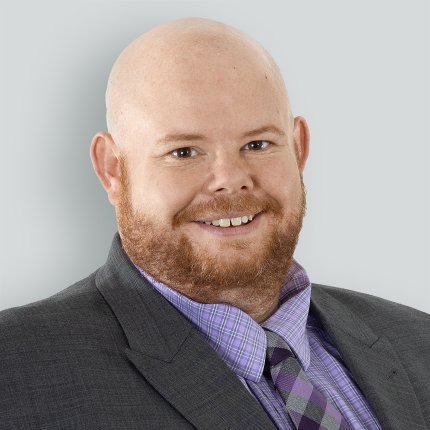
Robert Dove

Director + Chair, Gaming + Sports Betting Practice
rdove@keglerbrown.com
  • Download my vCard
  • Join my LinkedIn Network
dove

Robert Dove

Director + Chair, Gaming + Sports Betting Practice

  • Download my vCard
  • Join my LinkedIn Network

Robert is a key member of the firm’s commercial litigation team and maintains a formidable practice focused on representing the interests of his diverse clients across numerous highly regulated industries. He serves as a strategic advisor to businesses navigating the often-complex regulations that require their strict compliance and leads many of the firm’s client engagements in matters involving energy efficiency, public utilities, and data security and privacy.

He also serves as chair of the firm’s Gaming + Sports Betting practice, working with clients on establishing, expanding, and protecting their operations.  

Public Utilities

With experience advising retail energy providers, counseling non-profits, advocating for customers, and negotiating disputes between utilities, Robert serves clients with an array of Energy + Environmental needs. He regularly represents clients in a variety of matters related to renewable energy and energy efficiency programs, rate design, retail certification and compliance concerns, and issues at the Ohio Power Siting Board.

Gaming + Sports Betting

Robert serves as chair of the firm’s Gaming practice area, where he represents local and national clients on both individual gaming matters and statewide gaming issues. He has counseled charitable organizations and businesses on how to properly implement raffles, sweepstakes, and other promotional activities, and can guide clients through the Ohio Casino Control Commission’s licensing process. As part of his dual role in the Gaming and Government Affairs practices, Robert stays informed of new and emerging forms of gaming within Ohio. He has represented clients across the traditional gaming sector including fantasy sports operators, all three types of Ohio sports gaming proprietors, gaming suppliers, and management and mobile management services providers.

Government Affairs

Robert understands that representing clients in highly regulated industries requires advocating for them not just before governing agencies but also at the statehouse. Robert keeps his clients informed of the legislative issues that could impact their business and works with the firm’s Government Affairs team to create a comprehensive strategy designed to meet his clients’ objectives. 

Privacy + Data Security

Robert is a member of the International Association of Privacy Professionals and has earned the ANSI-accredited designation of a Certified Information Privacy Professional (CIPP/US). He advises clients on privacy and data security issues and helps them develop or review their existing privacy framework for compliance with state laws.

  • Capital University Law School (J.D., 2014)
  • The Ohio State University (B.A., 2011)
  • International Association of Privacy Professionals (IAPP), Certified Information Privacy Professional (CIPP/US, 2024) 

  • Ohio
  • U.S. District Court for the Northern District of Ohio
  • U.S. District Court for the Southern District of Ohio
  • U.S. Court of Appeals for the Sixth Circuit

  • Ohio State Bar Association, member, former Chair of the Public Utilities Section
  • Columbus Bar Association, member

  • Selected to the Ohio Rising Star list by Super Lawyers, 2023-2025
  • Recognized by The Best Lawyers in America®, 2026
  • Recognized by The Best Lawyers in America®, Ones to Watch, 2023-2025
  • Recognized by Columbus CEO Top Lawyers, 2023, 2024  
Experience

Licensing of Popular Mobile Sports Gaming Proprietor in Ohio's New Sports Betting Market

A person placing sports bets on his cell phone

Ohio Supreme Court Appeal of Landowner Rental Payments

A telecommunications pole with imagery of connected dots overtop

Regulatory Representation of Low-Income Weatherization Provider

A home wrapped in a scarf, representing weatherization of a structure

Representation of a Veteran in Federal Litigation


Publications + Presentations

Article

Sorry, Kalshi- Ohio Court Says Sports Betting by Another Name Is Still Sports Betting

Presentation

Statehouse + PUCO Update

Weatherize Ohio
Article

The Guardian Governor: Protecting Sports Gaming Integrity or Overstepping his Authority?

Article

Is iGaming Coming to Ohio?

Article

New Data Privacy Requirements, But Do They Apply to Your Business?

Presentation

Ohio’s Changes in Sport-Betting Laws

ESLA & GBLR Sports & Entertainment Business Symposium
Presentation

A Community Focused Overview of the Solar Development Process in Ohio

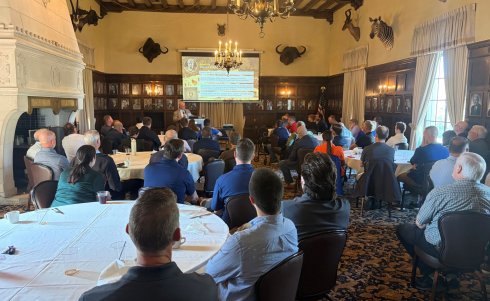
On June 25, Robert presented at the Ohio Prosecuting Attorneys Association’s Summer Workshop discussing the expansion of solar energy development in Ohio. Robert focused on the Ohio Power Siting Board process by which solar development is approved and how local communities can get involved in the process. He also covered the challenges communities may face when companies want to develop in the community as well as the benefits that can be achieved through engaging in the process.

Ohio Prosecuting Attorneys Association
Article

PACE financing for Ohio property owners

Columbus Business First
Article

Restaurant Revitalization Fund: All Your Questions Answered

In an effort to help revitalize the still-hurting hospitality industry, the Restaurant Revitalization Fund (the “RRF”), a critical piece of the recently passed American Rescue Plan Act, provides $28.6 billion in grants to restaurants and bars in need. Eligible entities or their affiliated groups can receive up to $5,000,000 per location, with a max of $10,000,000 per business. Importantly, awarded funds are not required to be repaid provided they are used for eligible purposes no later than March 11, 2023. Registration for funds begins tomorrow (Friday, April 30, 2021) at 9:00 AM ET, and registered small business owners may begin submitting their applications on Monday, May 3, 2021, beginning at 12:00 PM ET. If you are considering applying for the RRF on behalf of your business, here’s what you need to know: 1. Am I Eligible? In essence, any place of business having a primary purpose of serving patrons food or drink will qualify for the RRF. This includes restaurants, bakeries, food trucks, food stands, food carts, snack bars, caterers, saloons, inns, taverns, bars, brewpubs, taprooms, wine tasting spots, and distilleries. However, for bakeries, inns, brewpubs, distilleries, and wineries to qualify, the business must show that onsite sales to the public total at least 33% of gross receipts for each of the years included in the grant funding calculation. Importantly, publicly traded companies, businesses with more than 20 locations, and restaurants that have permanently closed are ineligible for the grants. 2. How Much Cash Can I Receive?  An eligible business can receive an amount equal to its pandemic-related revenue loss, generally calculated as follows: 2019 gross receipts, MINUS 2020 gross receipts, MINUS any amounts received from the Paycheck Protection Program (PPP) loans. For businesses that opened in 2019 or in 2020, calculations will vary based on annualized monthly gross receipts. Although the money is available on a “first-come, first-served” basis, the SBA is holding back the following amounts for certain classes of businesses: $500 million will be set aside for the smallest venues, with gross yearly receipts totaling less than $50,000; $5 billion will be set aside for restaurants whose 2019 gross annual receipts were less than $500,000; and $4 billion will be set aside for mid-sized venues taking in between $500,000 and $1.5 million on an annual basis. 3. How Can I Use the Money?  Funds received by small businesses can be used toward a variety of business needs, including payroll, rent and utilities, mortgage obligations (including principal and interest), outdoor dining builds and other construction costs, supplier costs, operational expenses, paid sick leave, and any other expenses that the SBA administrator “determines to be essential to maintaining the eligible entity.” However, one important restriction is that an RRF grant cannot be used towards any form of expansion other than outdoor patio seating. 4. How Do I Apply? Applications will be accepted through SBA-recognized Point of Sale Vendors (Square, Toast, Clover, NCR Corporation (Aloha)). On Monday at 12:00 PM ET, businesses will be able to apply directly through the SBA’s forthcoming online application portal. Unless you are applying through Square or Toast, you will need to register your business on the SBA’s application portal before you apply. To complete your application, you will need the following documentation: Verification of Tax information: IRS Form 4506-T, which can be completed digitally on the SBA platform. Gross Receipts Documentation: any of the following will qualify: IRS Form 1120 or 1120-S IRS Form 1040 Schedule C or Schedule F Bank Statements Financial Statements or Profit and Loss Statements POS Reports, including IRS Form 1099-K For Partnerships, IRS Form 1065 (including K-1s) Businesses that must demonstrate 33% of gross receipts were generated on-site may include Tax and Trade Bureau Forms 5130.9. If opened in 2020, such businesses must demonstrate their business model contemplated at least 33% gross receipts in onsite sales to the public. 5. When Should I Apply?  You should start gathering documentation now and apply the first day your business is eligible. Although timing for registration is flexible, it is crucial that small business owners submit their RRF application on Monday, May 3, 2021, at 12:00 PM ET or as quickly as feasible because the online application will only remain open until all funds are exhausted. To prepare for the SBA grant, the SBA recommends all small business owners preemptively register an account and prepare the documentation for the application. Technology partners such as Square and Toast are working with agencies to help provide fiscal documentation and streamline the application process. 6. Is There Any Way to Better Position My Application?  For the first 21 days of the program, the RRF will prioritize businesses owned and controlled by women, veterans, or people from economically and socially disadvantaged groups. After that, everyone else will be considered. A variety of groups, including those who identify as Black, Latinx, Indigenous American, Asian, Native Hawaiian, Alaskan, or Pacific Islander will qualify. These individuals must comprise 51% of ownership, though that benchmark can be met using a combination of owners of different demographic groups. Documentation certifying this qualification is not currently necessary. We understand how hard it has been to operate hospitality businesses during the COVID-19 pandemic. We are here to help. Do not hesitate to contact us if you need assistance navigating the complexities of this process or of operating your business during this challenging time. Attorneys Robert Dove and Jessica Skelly have been working closely with bars, restaurants, and other consumer-focused businesses in navigating state and federal programs like the Paycheck Protection Program and the Restaurant Revitalization Fund. All three are key members of the firm’s Ohio Restaurant Association legal team, providing counsel to clients throughout the hospitality industry supply chain.


Firm Highlights