
Trademarks, Servicemarks, Domain Names + Copyrights

Trademarks, Servicemarks, Domain Names + Copyrights

The lawyers and professionals in our IP strategy and consulting area specialize in the protection and management of trademarks, service marks, domain names and copyrights.

In order to help companies identify and protect critical intellectual property, we advise our clients regarding specific IP strategies and manage portfolios for a wide variety of companies and industries throughout the world.

Our Services

  • Brand protection
  • Trademark clearance searches
  • U.S. and global trademark registration
  • Copyright registration
  • Global IP portfolio management
  • Domain name disputes

Our Clients

Our clients range from true “basement start-ups” to established businesses looking to expand. We represent companies in all sectors at every point in the growth stage. From formation through growth, we offer representation to innovative clients.


People

Jeff Nein

Director + Chair, Intellectual Property Practice

614-462-5418Email

Experience

Lead Counsel to Homage on "Deal of the Year" Investment from Ryan Reynolds' Maximum Effort Investments LLC

Multicolored t shirts folded cylindrically and placed in a line

Due Diligence for a New Hotel Restaurant’s Branding

Lit awning outside of a hotel with a taxi cab out front

Sale of Hot Chicken Takeover Concept to Private Equity

Lots of fried chicken on a plate with sliced pickles

Lead Counsel for Large Acquisition of Multi-Unit Franchise Business

Inside of a modern furniture store

Multiple Franchisor Negotiations of Stadium Licensing Deals

Computer generated graphic of the inside of a sports stadium with an open roof at night

Sale of Leading Global EdTech App to UK Education Giant

A hand holding up a white caption shape against a light blue background

Forging a Landmark Strategic Partnership between Donatos and Red Robin

A Donatos pizza with green peppers, onion, and sauage with a plate of shredded cheese and a glass of wine next to it

Acquisition of U.S.-Based IT Services Provider by Indian Software Firm

Circuit Board Background - Computer, Data, Technology, Artificial Intelligence

Publications + Presentations

Newsletter

The Impact of Brexit on Your IP: Key Considerations + Action Steps

Smart SummaryUK trademark and patent protection for US businesses is set to be significantly disrupted on January 1, 2021.Existing registered EU trademarks will be automatically cloned by the UK, but pending applications will not.Companies should be reviewing IP clauses, auditing their assets, filing new applications, and obtaining physical addresses in the UK to remain protected.On the heels of “Brexit,” the 2016 referendum in which a majority of UK citizens voted to leave the European Union, the UK has been working diligently throughout the past 11 months to facilitate a smooth exit. Although the status of Brexit and the related rules for the transition are constantly evolving, US companies doing business in the UK must prepare themselves for the impact Brexit will undoubtedly have on their strategy and local operations. Among the many impacts Brexit could have on a company’s “crown jewels,” one that could be overlooked is the effect it will have on your IP strategy. So, for companies doing business in the UK, here are five key IP considerations to be aware of in light of Brexit and a list of recommended actions each of those companies should be taking.5 Brexit-Related IP Considerations to Know Beginning on January 1, 2021, all EU-wide trademark and Community design rights obtained under the EU regime will no longer be protected in the UK. Going forward, to protect rights in the UK, trademark rights holders must file an application directly with the United Kingdom Intellectual Property Office (UKIPO), which would be separate and apart from their application filed with European Union Intellectual Property Office (EUIPO).Moreover, under the Madrid Protocol, an international treaty designed to simplify and centralize a singular trademark registration application that would then secure protection in 90 countries (including the US and UK), rights holders must designate the UK as a separate territory from the EU in their applications.On December 31, 2020, whether or not the UK and EU come to an agreement for transition, the UKIPO will automatically place on its records all registered EU trademarks, Community registered designs, and unregistered Community designs. These “cloned” registrations will become a UK-equivalent registration and will be effective as of January 1, 2021. No additional action on behalf of the current rights holders will be necessary, as the registrations will not be re-examined by the UKIPO.Applications that are pending in the EUIPO will not be cloned. Rights holders of pending EUTM applications and EU designations must actively file “clone applications” with the UKIPO for protection within 9 months in order to claim priority based upon the initial EU application date.Brexit would not impact rights of patent holders in the EU. The UK is a part of the European Patent Convention, which is an international convention of members from the EU. However, the UK has vocalized that it will not participate in the Unified Patent Court located in EU member states or the unitary patent system, so the impact of Brexit on a uniformed EU patent regime would need to be closely monitored.Most copyright works are not dependent on the EU and will still be protected in the UK and the EU, whether made before or after January 1, 2021. However, some EU cross-border copyright protection agreements, such as content services and databases, will be the subject of the ongoing negotiations, and will also need to be closely monitored.Recommended Action Plan for US CompaniesRevisit IP clauses. If a rights holder has cross-border agreements that reference IP protection limited to the EU jurisdiction, it should revisit those agreements to ensure that additional protections are included to cover IP rights in the UK, effective, January 1, 2021.Audit your EU/UK IP portfolio. Undertake an audit of all your current EU registrations to ensure that they are adequately and properly cloned by the UKIPO. Our IP team is already well underway toward working with our clients on these audits.File UK applications. If a rights holder is seeking protection in the UK specifically through its pending application before the EUIPO, pursuant to the Madrid Protocol, a separate application needs to be filed in the UK.Re-file for renewal. If the rights holder of an EU registration has already filed for a renewal before the 6-month 2021 due date, the renewed registration will not be cloned by the UKIPO. In these cases, rights holders must file a separate renewal with the UKIPO.Obtain a UK address. Effective January 1, 2021, all new matters before the UKIPO must have an address for service in the UK, though cloned marks that derive comparable UK rights from existing EU registered marks are not required to have an address for service in the UK for 3 years from transition date. As a rights holder, you should consider a strategy that includes obtaining an address for service in UK. Some options could include using your legal counsel’s resources in the UK or, if you already have a presence in UK through a subsidiary or affiliate, that local address could be used for service.A Dedicated Brexit IP Task ForceWith the specter of Brexit carrying such wide-ranging implications for US businesses, our IP team has created a dedicated task force in charge of working with international clients on their UK IP protection strategy, including reviewing IP agreements, leading international IP audits, filing UK applications, re-filing UK renewals, and securing physical addresses to comply with UK regulations. You may contact one of our task force members directly to discuss your strategy.Vinita Mehra, Director + Chair, Global BusinessJeff Nein, Director + Co-Chair, Intellectual Property Jessica Skelly, Associate Sarah Bernheisel, IP Paralegal About our Global IP Protection PracticeOur global IP team regularly works with businesses and individuals to establish, monitor, investigate and prosecute thousands of trademarks, service marks, patents and other brand assets for our clients around the world. We offer unique, efficient and creative cost-effective solutions that guide businesses through the regulatory and legislative hurdles that exist in the ever-evolving global landscape. Our services primarily include global IP portfolio management, franchising and licensing, private investigations of infringement, and trademark and patent litigation.

Presentation

Grow + Sell Your Business Part Two: IP Protections

Presented by Eric Duffee and Steve Barsotti on 9/19 as Part 2 of a Four Part Series. This seminar introduced the basics of Patent Requirements, Copyrights and confidential information (including Trade Secrets) and explained the strategies for and significance of protecting them. Discussions included necessary criteria for registration, how rights are established, and steps for filing and enforcement.

Article

Keeping the “Tell” in Intellectual Property

Steve Barsotti appeared in the November 2017 issues of Columbus CEO, interviewed as part of an article on businesses protecting their intellectual property. Its focus was on the need for IP protection when faced with First to File provisions and collaborative cultures. Steve discusses incubators and accelerators, saying they need to agree on rules of engagements from the beginning, and says “There has been a shift in the entrepreneurial culture to one of collaboration and sharing of ideas. That’s definitely a positive, but it also presents a real opportunity to create thorny IP issues.”

Columbus CEO, November 2017
Presentation

Unique Legal Issues Facing the Restaurant Industry

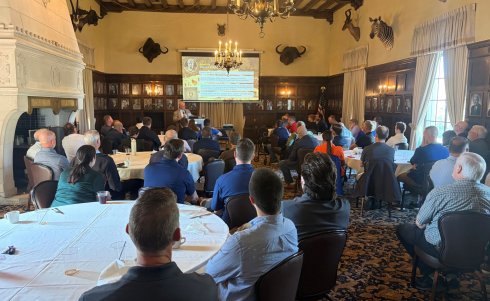
This event explored several strategic considerations unique to the restaurant industry. Using a mix of legal insights and case study examples, Kegler Brown attorneys looked at Employment, Real Estate, and Intellectual Property issues that can have significant impacts on owning and managing a growing restaurant: Brendan Feheley: Common Employment Mistakes Restaurant Owners MakeJeffrey Stiltner: Restaurant Specific Lease Provisions + Lease Negotiation StrategiesSteve Barsotti: Branding + IP Strategies for Scaling Your Concep

Kegler Brown Employment, Real Estate + Intellectual Property Seminar
Presentation

New Year's Resolution: A Better IP Strategy Presentation

On Wednesday, January 25, our Intellectual Property team hosted a breakfast briefing on how to prepare a better IP Strategy. The briefing focused on three cases studies from three different industries: retail, technology, and service. Each case study walked through the IP strategy of a prominent company - Chipotle, P&G, and Uber.

Article

Supreme Court Raises the Stakes in TTAB Proceedings with B&B Hardware Decision

On March 24, 2015, the U.S. Supreme Court issued a 7-2 decision declaring that Trademark Trial and Appeal Board (“TTAB”) rulings should be given preclusive effect when the TTAB’s considerations are “materially the same” as those before a district court, provided the other “ordinary elements” of issue preclusion are established. B&B Hardware, Inc. v. Hargis Industries, Inc., No. 13-352 (U.S. Mar 24, 2015). The upshot of the Supreme Court’s decision in B&B Hardware is that the stakes are raised in TTAB proceedings, with the outcomes having serious business consequences beyond the fate of the specific trademark registration at issue. The majority opinion, penned by Justice Alito, factors into an 18-year-long dispute between B&B Hardware and Hargis Industries, both manufacturers of metal fasteners. In 1993, B&B registered the mark SEALTIGHT for metal fastener products for use in the aerospace industry. Hargis later attempted to register its SEALTITE mark with the U.S. Patent and Trademark Office in 1996 for metal fasteners use in construction of metal and post-frame buildings. B&B instituted an opposition proceeding with the TTAB, arguing against registration of Hargis’ mark due to a likelihood of confusion with its prior-registered SEALTIGHT mark. The TTAB agreed with B&B and denied registration, citing a likelihood of confusion between the marks. Importantly, Hargis did not appeal the decision. While the opposition proceeding was pending, B&B also filed a claim for trademark infringement against Hargis in federal district court. Prior to the district court’s ruling, the TTAB announced its own ruling on likelihood of confusion. B&B moved for summary judgment arguing that Hargis was estopped from relitigating the issue of likelihood of confusion due to the preclusive effect of the TTAB’s decision. The district court disagreed, stating that the TTAB’s decision did not have preclusive effect. On appeal to the Eighth Circuit, the Court of Appeals also ruled in favor of Hargis, reasoning that issue preclusion was not appropriate since district courts utilize different criteria than the TTAB in evaluating a likelihood of confusion claim. In March, the Supreme Court reversed the decision. Turning to the Restatement (Second) of Judgments for guidance, the Supreme Court announced there is no absolute rule precluding a TTAB decision from being given preclusive effect, noting that “[w]hen an issue of fact or law is actually litigated and determined by a valid and final judgment, and the determination is essential to the judgment, the determination is conclusive in a subsequent action between the parties, whether on the same or a different claim.” Restatement (Second) of Judgments §27, p. 250 (1980). Thus, even though district courts and the TTAB have minor differences (but not fundamental differences) in the details and procedures associated with determining the likelihood of confusion between two marks, as long as a final decision is reached by the TTAB on the same issue that is before a district court, deference should be given to the TTAB. Historically, resources devoted by parties to TTAB proceedings have been relatively scant (as contrasted with infringement actions), as a TTAB proceeding was often viewed as merely “Round 1” of a larger fight. Following the Supreme Court’s decision, the possibility of a “Round 1” knockout is very real, meaning that parties need to keep their guard up. From a defense perspective, although risk clearly existed prior to the decision, the Court has now removed any doubt that an adverse decision from the TTAB (which cannot award monetary damages) can be used as leverage in an infringement action in federal district court (which can award damages). From a plaintiff’s perspective, the ruling will force a strategic decision regarding forum to be made at the outset of a dispute, with the understanding that there will be no clear “second bite at the apple.” From either perspective, the process of TTAB opposition and cancellation proceedings will likely begin to more closely resemble contentious, more costly litigation, and losing parties at the TTAB will be more likely to appeal.The true impact of B&B Hardware will become clearer as litigants evolve their registration and enforcement strategies, and the courts begin applying the decision to TTAB rulings. Moreover, the TTAB may begin assigning greater weight to evidence of actual uses of a mark in the marketplace, uses which may be different in nature or scope from those listed in a registration, which will further impact litigation strategy.In the meantime, litigants in administrative trademark proceedings and infringement suits will need to carefully craft their strategies on a case-by-case basis, to account for the changing risk landscape. The only certainty is that TTAB proceedings are likely to become more costly fights.

Columbus Bar Lawyers Quarterly

Firm Highlights